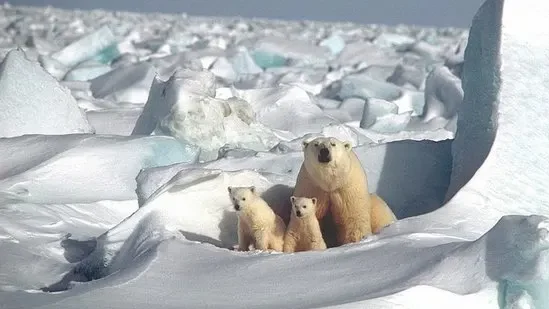
Apparently, polar bears are becoming bulkier, heavier, and even healthier. On Spitsbergen, the Norwegian Svalbard archipelago, a new long-term study paints a picture that hardly fits the usual narrative of climate catastrophe.
For years, people have been told that climate change and the supposedly disappearing Arctic ice are harming polar bears. Yet reality refuses to cooperate with the constant fearmongering. Instead of appearing as emaciated symbols of apocalypse, the animals now seem healthier than ever – and have been so since the early 1990s, even though the number of ice-free days has increased since then.
The researchers from the Norwegian Polar Institute had actually expected the opposite. After all, sea ice is considered the polar bears’ central hunting platform, supposedly indispensable for their survival. But clearly, the animals are more adaptable than previously thought. Between 1992 and 2019, 770 adult bears were measured and weighed – with a clear result: their fat reserves have increased significantly. “The fatter a bear, the better,” says study leader Jon Aars.
The bears have discovered new food sources. Instead of hunting seals exclusively from the ice, they increasingly make use of land-based prey. Reindeer and especially walruses have become far more common on their menu. The latter have been strictly protected since the 1950s, their populations have recovered – and now provide a plentiful supply of high-energy fat.
Another, often overlooked effect adds to this: less ice does not necessarily mean less prey. When seals are forced to concentrate on smaller areas of ice, they become easier for bears to reach. Instead of endless hunting trips over vast distances, this creates localized, efficient feeding opportunities. This hardly fits the narrative of the helpless, starving polar bear supposedly already on the brink of extinction.
Naturally, the usual voices of alarm try to counter this right away. Environmental organizations and accompanying commentators emphasize that this is only a short-term effect. In the long run, they say, collapse is inevitable. Body fat, they argue, is only “one piece of the puzzle.”
Positive news simply doesn’t fit into the alarmist picture. In doing so, they tend to ignore one crucial fact: the polar bear population on Svalbard has been recovering since the end of intensive hunting in the 1970s. Decades of protection, increasing prey numbers, and ecological adaptability create an overall picture that is not compatible with the simplistic narrative of supposedly CO₂-driven species extinction.